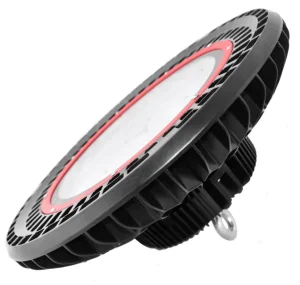
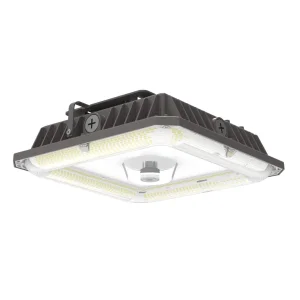
As global carbon-neutral mandates tighten and commercial energy rates fluctuate, modern facility operations demand engineered lighting that performs far beyond standard illumination. LED low bay and high bay lighting have transitioned from simple replacements of obsolete HID systems to high-performance assets capable of optimizing visual environments, enhancing employee safety, and integrating directly with automated Building Management Systems (BMS).
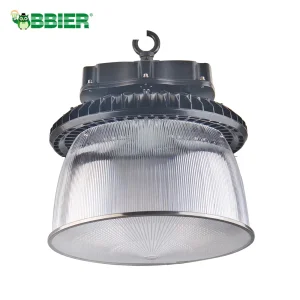
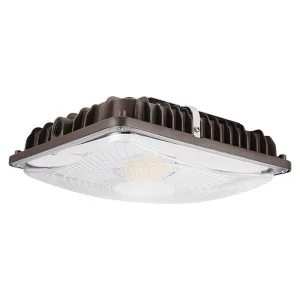
Low bay fixtures, traditionally deployed at mounting heights of 4 to 6 meters (13 to 20 feet), operate in spaces where glare control, wide beam dispersion, and vertical footcandle distribution are crucial. Unlike high bay systems which direct concentrated light downward from greater heights, low bay luminaires must cover a wider spatial pattern without causing eye strain to operators below. Achieving this balance requires expert optical configuration, solid-state electronic integration, and advanced thermal management.
Maintaining unified glare ratings under 22 is critical in mid-to-low ceiling spaces to reduce eye strain, minimize headaches, and ensure safety in high-speed picking or assembly areas.
Utilizing high-transmittance polycarbonate materials and custom-engineered 90° or 120° optics targets light output precisely where needed, avoiding wasted lux on walls or ceiling spaces.
Manufactured with specialized, corrosion-resistant powder coatings, IP65/IP66 enclosures, and IK08 impact ratings to reliably withstand high vibrations and variable temperatures.
In low ceiling environments, hot ambient pockets often build up near rafters. Standard commercial light fixtures installed in these zones risk thermal overload, accelerated lumen degradation, and early driver failure. For example, in cold storage facilities operating down to -30°C, or electronic assembly plants generating steady ambient heat, the thermal load varies significantly. Guangdong Cool Lighting Electronic Co., Ltd addresses these environments with deep-well heat sink fins, thermal conductive pathways, and driver-isolation chambers designed to dissipate heat efficiently.
Understanding the internal electrical and physical construction of industrial fixtures is key to identifying reliable, long-life options. A standard low bay luminaire relies on three core components: the LED emitter array, the constant-current driver, and the physical aluminum frame that acts as a heat sink. To provide a complete overview for facility engineers and purchasers, we break down these component requirements below:
| Parameter Component | Standard OEM Grade | Guangdong Cool Premium Specs | Operational Benefit |
|---|---|---|---|
| Luminous Efficacy | 130 - 150 lm/W | Up to 210 lm/W (Option available) | Slashes energy consumption by up to 35% at equivalent lux output. |
| LED Package Type | Generic 2835 SMD | Lumileds / Bridgelux / Nichia 3030/5050 SMD | Guarantees minimal lumen degradation and high color rendering stability. |
| Driver Design | Standard Plastic Internal | Sosen / Inventronics / MeanWell IP67 Isolated | Protects against voltage spikes, harmonic noise, and high temperatures. |
| Heat Dissipation | Stamping Aluminum Sheet | A380 Die-Cast Aluminum with convection fins | Keeps junction temperatures below 75°C, ensuring a 50,000+ hour lifespan. |
| Optic Lens Material | Regular Acrylic (PMMA) | Non-yellowing UV-Stabilized Polycarbonate | Preserves light transmission levels even under constant UV exposure. |
Located in Guangdong's industrial manufacturing hub, Guangdong Cool Lighting Electronic Co., Ltd leverages a highly efficient supply chain ecosystem. Raw materials, electronics assembly (SMT), aluminum die-casting, and quality testing labs operate in close proximity. This geographic advantage reduces component lead times, supports comprehensive quality control, and allows us to provide cost-effective OEM/ODM customization services to clients worldwide.


For over a decade, we have developed high-performance commercial and industrial LED luminaires that help facilities optimize energy use and improve workplace safety.
Our manufacturing facility covers 8,000 square meters and is operated by 120 skilled assembly technicians and R&D engineers. Equipped with automated SMT production equipment, high-volume die-casting presses, and a dedicated photometric laboratory (including integrating spheres and goniophotometers), we ensure every production run meets our strict quality standards.
Whether you require customized packaging, specialized optical lenses, custom mounting brackets, or specific driver configurations, our team has the technical expertise to deliver. We are the original designer of our entire product portfolio, offering comprehensive OEM and ODM support to distributors, electrical contractors, and utility partners worldwide.
Our 8,000 sqm production facility operates multiple SMT lines and high-capacity assembly lanes, backed by comprehensive QA testing to ensure consistent performance at scale.
Our engineering and design teams focus on ongoing product refinement, optimizing thermal performance, ease of installation, and operational reliability.
We provide responsive technical support, straightforward warranty assistance, and custom components to keep your projects running smoothly post-installation.


Modern industrial lighting systems are increasingly expected to support smart building networks. Our technology development plan focuses on integrating controls directly into our low bay and high bay fixtures, allowing facilities to optimize energy use through automation.
Our products support standard control options like 0-10V dimming, DALI-2 (Digital Addressable Lighting Interface), and Zigbee or Bluetooth Mesh protocols. By adding built-in microwave occupancy sensors and ambient daylight sensors, facilities can reduce unnecessary energy consumption in vacant warehouse aisles or areas with sufficient natural light.
Additionally, we design our platforms in alignment with Zhaga Consortium standards. This standardized approach allows key components, such as LED modules and drivers, to be easily upgraded or replaced over time, supporting sustainability goals and simplifying future maintenance.
To serve international markets, our fixtures are designed to meet diverse regulatory standards:
As circular economy principles become standard across industries, we design our luminaires for serviceability. Rather than producing sealed, single-use units, our low bay housings are built for component-level access. This allows technicians to replace internal drivers or surge protectors without discarding the entire aluminum housing or LED assembly, reducing waste and minimizing the total cost of ownership over the product's lifespan.
The primary differences are mounting height and light distribution. Low bay fixtures are engineered for mounting heights between 4 to 6 meters (13 to 20 feet) and offer wide beam angles (90° to 120°) to ensure even, glare-free lighting closer to the floor. High bay fixtures are designed for ceilings of 6 to 12+ meters (20 to 40+ feet) and use narrower beam angles to project light efficiently down to the work plane.
We offer end-to-end OEM and ODM support. Our design team can modify housing aesthetics, adjust optical lens configurations, print custom logos, design branded packaging, and incorporate specified LED chips or drivers. Clients receive photometrical IES file simulations to verify performance before manufacturing begins.
Yes, many of our fixtures carry IP65 or IP66 ratings, indicating they are fully protected against dust ingress and water jets. Additionally, we apply electrophoretic powder coatings to the aluminum housings to prevent oxidation in high-humidity or salt-air environments.
Our product ranges hold various certifications depending on the model, including UL, CE, CB, TUV, KC, and ETL, as well as DLC Premium listings for verified energy efficiency. This compliance allows our fixtures to be safely integrated into major public and commercial grids worldwide.
 Cool Light