Explore our range of architectural, commercial, and industrial lighting solutions engineered for efficiency, optical precision, and safety compliance.
The global emergency lighting sector is transitioning rapidly from basic, passive safety fixtures to highly integrated, intelligent building emergency management networks. Driven by international green building mandates and rigorous smart-city guidelines, contemporary emergency lights are no longer isolated battery units. Today's commercial infrastructure relies on central battery systems (CBS) and smart self-testing addressable luminaires connected via DALI (Digital Addressable Lighting Interface), Zigbee, or Bluetooth Mesh protocols.
These smart systems allow facilities managers to perform automated monthly and annual battery discharge tests, logging structural health diagnostics without manual inspection. By eliminating human error in testing cycles, compliance with local building codes becomes automated, significantly reducing operating expenses for commercial assets and critical municipal infrastructure.
Real-time tracking of cell voltages, temperature gradients, and internal resistance anomalies prevents sudden thermal failure in emergency backup scenarios.
Automated software protocols ensure that structures remain in absolute conformity with safety frameworks including NFPA 101, UL924, and EN 60598-2-22.
Sourcing emergency lighting systems requires strict engineering evaluation. Our direct research highlights the five core pillars top-tier global exporters must satisfy.
Top exporters provide comprehensive testing records. Ensure your selected suppliers possess UL 924 (North America), CE-EMC/LVD (Europe), AS/NZS 2293 (Australia), and CB scheme certificates for global commercial application.
The industry has shifted decisively from Nickel-Cadmium (Ni-Cd) to Lithium Iron Phosphate (LiFePO4) technology. LiFePO4 boasts a longer lifecycle (over 5-8 years of active service), minimal self-discharge, and high thermal stability under continuous trickle charge conditions.
High-performance emergency luminaires incorporate custom lenses (asymmetric or oval distributions) designed to maximize path spacing. This minimizes the total number of light units required to achieve standard illuminance requirements.
Operating a modernized 8,000 square meter manufacturing plant staffed by 120 highly specialized technicians, Guangdong Cool Lighting Electronic Co., Ltd is an original design manufacturer (ODM) and OEM supplier of emergency luminaires.
Equipped with advanced optical and electronic testing labs, our dedicated engineering division specializes in energy-efficient emergency solutions, high-durability downlights, and custom driver layouts tailored to demanding international standards.
By controlling all aspects of the design process, our engineering teams ensure that emergency fixtures are optimized for heat dissipation, driver lifespan, and emergency runtime reliability. Our custom capability covers:
Discover our successful installations around the globe, spanning commercial hubs, office headquarters, and high-efficiency retail complexes.
High-efficiency, uniform light distribution for modern office interiors and hospitality zones.
View Project Details >
High intensity spotlights offering superb color rendering (CRI > 90) for premium retail exhibits.
View Project Details >
Continuous architectural lighting profiles that balance aesthetic elegance with energy compliance.
View Project Details >Market-proven, energy-efficient fixtures popular among worldwide B2B buyers and commercial engineering distributors.


Quality and stability are critical in emergency lighting applications. An emergency light must work instantly when mains power drops. That is why our technical division works to eliminate common points of failure like component heat stress and bad solder joints.
We work with global suppliers for raw materials and electronic components: we use premium driver chips, high-temperature electrolytic capacitors, and top-tier LED emitters (such as Cree, Osram, and San'an). This technical focus allows our emergency drivers to operate continuously with minimal maintenance for over 50,000 hours.
We offer extensive OEM/ODM support, helping global brand owners launch products tailored to their target markets. We handle mechanical adjustments, thermal simulation, customized packaging, and supply compliance testing documents.
Every commercial space has its own spatial challenges and aesthetic demands. An emergency lighting plan that works well in a warehouse might not suit a modern hotel lobby or high-end retail boutique.
How our emergency systems adapt to distinct operating environments, climates, and safety requirements.
In multistory commercial high-rises, emergency lighting must integrate with local BMS platforms. Recessed ceiling emergency lights provide clear illumination paths down stairwells and corridors, while DALI monitoring reports the status of each driver back to the central console.
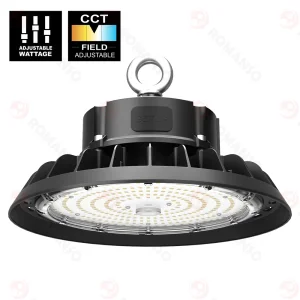
Industrial storage areas require high illumination levels and robust environmental protection. Damp-proof, IP-rated high-bay emergency lights with custom battery heaters work reliably in sub-zero cold storage facilities and high-dust manufacturing plants.
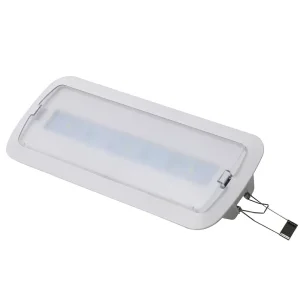
Luxury hotels and high-end retail spaces require safety fixtures that do not compromise the aesthetic interior design. Our compact, recessed emergency lights blend into the ceiling, hidden from sight until they are activated by a power outage.
Direct technical answers from our engineering directors regarding emergency compliance, battery systems, and import logistics.
Emergency lighting requirements vary by region. North American standard UL 924 and NFPA 101 require a minimum backup duration of 90 minutes. In Europe (under EN 60598-2-22) and the United Kingdom, standard safety codes require a 3-hour (180 minutes) discharge runtime.
Lithium Iron Phosphate (LiFePO4) offers three times the lifecycle of Nickel-Cadmium, performs better at high temperatures, contains no hazardous heavy metals, and reduces standby energy costs due to efficient charge-termination design.
Maintained emergency lights remain lit continuously during normal operation and remain on during power failures. Non-maintained lights stay off under normal mains power, turning on only when the primary electrical supply fails.
The integrated microcontroller (MCU) tracks elapsed time and runs diagnostic tests at set intervals. The system checks battery health, charging circuits, and LED continuity, displaying diagnostics via colored LED indicators.
Explore our architectural and utility fixtures, designed to deliver high lumen-per-watt efficiency, durability, and reliable performance.
 Cool Light