China Top Garden Light Factories & Supplier

Precision Engineering, Intelligent Controls, and Industrial Scale for Global Outdoor Luminaires

Industrial Scale & Verified Global Footprint

Guangdong Cool Lighting Electronic Co., Ltd combines automated manufacturing infrastructure with a multi-layered global logistics and service network.

532,532
Happy Clients Globally
17
Branches & Subsidiaries
300
Registered Distributors
19
Countries & Regions Served

Guangdong Cool Lighting Electronic Co.,Ltd

Operating out of an advanced 8,000 square meter manufacturing facility, we employ over 120 skilled technical staff and engineers. Equipped with top-tier CNC machining, automated SMT lines, spectrophotometers, and IP66/IP67 ingress test chambers, we offer integrated R&D, structural design, photometric validation, and complete OEM/ODM production services.

Our Operational Advantages

How we protect, scale, and optimize your supply chain requirements for landscape and garden lighting projects.

Production Advantage

An 8000sqm state-of-the-art facility equipped with precision testing chambers, SMT production lines, and high-efficiency tooling capabilities. Complete OEM and ODM support guarantees fast product development cycles.

Professional R&D

Our experienced engineering team focuses on structural durability, thermal dissipation design, optic distribution, and smart IoT control systems, turning conceptual designs into reliable outdoor fixtures.

Dedicated After-Sales

From initial design support to long-term post-installation service, our global support teams ensure that every product meets specified field operational targets and regulatory compliance.

Whitepaper: Tactical Sourcing of Commercial Garden and Landscape Lighting from China

The global demand for energy-efficient, robust outdoor landscape lighting is growing rapidly. Architectural designers, municipal planners, and commercial real estate developers require systems that combine aesthetic appeal with low power consumption and long-term durability. Navigating the manufacturing landscape in China requires an understanding of technical standards, material options, and supply chain logistics. This paper provides the strategic insights needed to identify high-quality partners and select the right outdoor lighting products.

Key Structural Highlight: China accounts for over 70% of global LED production. However, moving from standard lighting to professional-grade outdoor landscape luminaires requires focusing on materials, thermal design, and electrical protection.

1. The Landscape Sourcing Landscape: High-Quality vs. Standard Manufacturing

When source garden and path lighting, identifying the differences between consumer-grade products and heavy-duty architectural luminaires is crucial. The primary differences lie in the construction materials, drivers, and ingress protection designs:

  • Structural Alloys & Coating Durability: Standard fixtures often use low-grade recycled aluminum, which is prone to porosity and galvanic corrosion. High-quality manufacturers use ADC12 or A380 die-cast aluminum alloys treated with chromate conversion undercoats and finished with AkzoNobel thermosetting powder coatings. This prevents oxidation and peeling in salty or humid coastal environments.
  • Thermal Engineering & Junction Heat: High-power outdoor lights must maintain a junction temperature below 85°C to prevent early lumen depreciation. Advanced fixtures feature integrated thermal channels, heat-pipe paths, or finned heat sinks that allow efficient heat dissipation.
  • Driver Systems & Surge Protection: Low-cost suppliers often use generic drivers that fail during voltage fluctuations. Professional products feature isolated drivers with high power factors (PF > 0.95), low Total Harmonic Distortion (THD < 15%), and built-in 4kV to 10kV surge protection devices (SPDs) to withstand grid instability and lightning strikes.

2. China Industry 4.0: Supply Chain Resilience and Manufacturing Value

The manufacturing cluster in Guangdong, China, offers a highly integrated supply chain that spans raw silicon, SMT chip packaging, precise optical molding, and automated testing. Guangdong Cool Lighting Electronic Co., Ltd leverages this geographic and technological advantage to deliver consistent quality and manufacturing efficiency.

By using automated die-casting machines, robotic electrostatic powder coating systems, and computerized spectrophotometers, human error is minimized. This system also allows for fast production scaling, enabling the factory to deliver high-volume orders with consistent optical and mechanical quality.

Supply Chain Optimization:

  1. In-House Die-Casting & Machining: Minimizes dependence on sub-tier vendors, ensuring strict control over dimensional tolerances and structural integrity.
  2. Traceable Component Integration: Uses tier-one LEDs (such as Philips, Cree, Lumileds, or Osram) and driver units (such as MeanWell, Inventronics, or SOSEN) to ensure long product lifetimes.
  3. Comprehensive Quality Control: Includes strict testing protocols such as 100% burn-in cycles, salt spray testing (ASTM B117), thermal cycle chambers (-40°C to +60°C), and automated IP66/IP67 pressure chambers to ensure water resistance.

3. Technology Roadmap: Smart Control Systems & Advanced Optics

The landscape lighting industry is moving towards smart systems, high-efficiency solar units, and dark-sky compliant designs.

Smart Control Integration (IoT & Dimming Protocols)

Modern commercial installations require remote, automated management. Advanced China factories are integrating smart hardware directly into their product architectures:

  • DALI-2 / 0-10V Dimming: Allows integration with building automation systems (BAS) and lighting management consoles.
  • Wireless Protocols (Zigbee 3.0, Bluetooth Mesh, LoRaWAN): Enables dynamic zone grouping, scheduling, and power management without needing additional control wiring.
  • DMX512 Color Control: Essential for architectural facade illumination and dynamic landscape installations.

Next-Gen Solar Integration

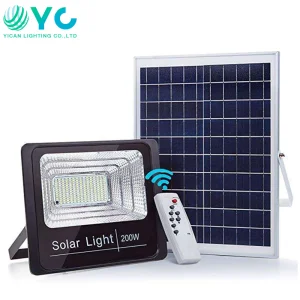
Modern solar landscape lights are shifting away from low-quality materials. High-performance solar lights feature Monocrystalline PV panels (efficiency > 22%), combined with long-life Lithium Iron Phosphate (LiFePO4) battery packs and smart Maximum Power Point Tracking (MPPT) controllers. This combination ensures reliable light output even during extended periods of overcast weather.

Advanced Optical Engineering

Precision lens design helps direct light exactly where it is needed, reducing glare and light pollution:

  • Low-Glare Shielding & Deep-Set LEDs: Minimizes direct visual glare, improving visual comfort along pathways.
  • Asymmetric Optical Distributions: Directs light along paths or vertical walls, avoiding wasted light in unintended areas.
  • Dark-Sky Compliance: Limits upward light emission to protect night-sky environments and meet municipal regulations.

4. Macro Solutions: Specific Applications & Design Criteria

To help choose the right fixture for your project, here are the main design criteria by application type:

Application Area Core Challenges Key Specifications Required Recommended Fixture Type
Urban Parks & Walkways Vandalism risk, long run times, glare reduction. IK10 impact resistance, IP65/IP66 ingress rating, low-glare optics. Heavy-duty bollards and recessed ground luminaires.
Commercial & Retail Plazas Color accuracy, architectural consistency. CRI > 85, CCT-adjustability (3CCT), 0-10V dimming. Slim profiles, wall-washers, and adjustable gimbals.
Coastal & Marine Resorts Salt air corrosion, high humidity, water spray. 316 stainless steel or copper housing, IP67 rating, anti-corrosive coating. Heavy-duty landscape spot lights and marine-grade path lights.
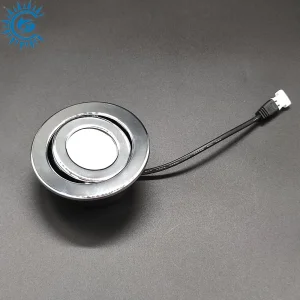
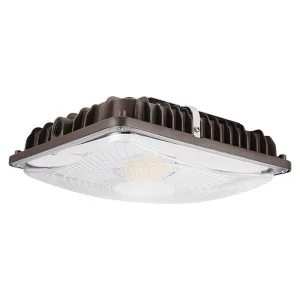
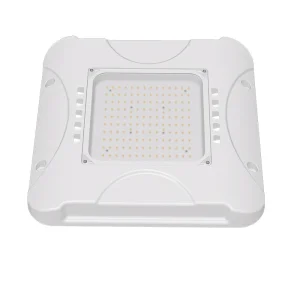
Industrial & Parking Zones High-intensity lighting, continuous operation. High efficacy (130+ lm/W), 10kV surge protection, DLC listings. LED canopy lights and high-output flood lights.

5. Localization, Quality Standards, and Compliance

Sourcing from overseas factories requires ensuring compliance with local target market standards. Leading Chinese factories maintain up-to-date certifications to simplify customs clearance and site inspections:

  • North America: UL (Underwriters Laboratories) or ETL (Intertek) certification for electrical safety, alongside DLC (DesignLights Consortium) listing for utility rebate eligibility. FCC compliance is also required for electromagnetic interference.
  • European Union: CE mark (LVD and EMC directives), RoHS certification for restricted hazardous substances, and compliance with the ErP directive for energy-efficient products.
  • Ingress & Impact Ratings: Verification of dust and water resistance (IP65, IP66, IP67) and impact protection (IK08 to IK10) through independent laboratory test reports.

Featured Engineering Projects

View some of our recent lighting installations, demonstrating our capabilities in architectural design and optical performance.

SMD LED Downlights Project

SMD LED Downlights

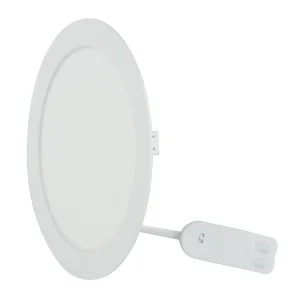
High-efficiency, uniform architectural downlight integration for commercial lobbies and corridors.

View Case Study >
COB Downlight Project

COB Downlight

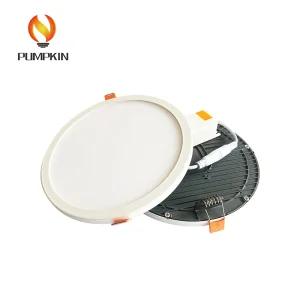
Deep reflector design offering low-glare accent lighting for high-end hospitality projects.

View Case Study >

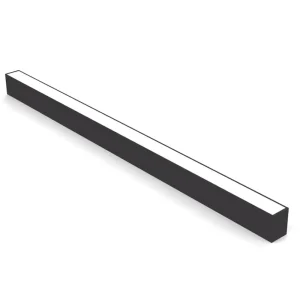
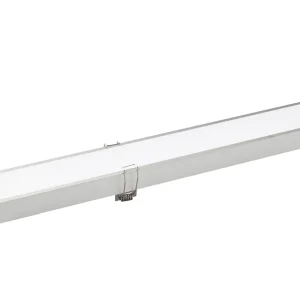
Linear LED Lighting Integration

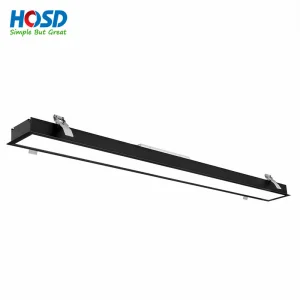
Seamless outdoor linear accent profiles designed for modern building facades and garden pathways.

View Case Study >

Frequently Asked Questions

Answers to common technical, manufacturing, and logistical questions from global buyers.

Q1: What finishes are used to protect landscape lights from coastal salt-spray corrosion?
For coastal environments, we recommend either marine-grade 316 stainless steel or heavy-duty copper housings. For die-cast aluminum fixtures, we apply a multi-stage pretreatment including chromate conversion coatings, followed by an electrostatically applied, thermosetting architectural-grade powder coating (such as AkzoNobel). These processes are tested to meet ASTM B117 salt spray standards for up to 1000 hours of continuous exposure.
Q2: How do you guarantee the ingress protection (IP) rating of your outdoor fixtures?
We use high-temperature, molded silicone gaskets that resist compression set. Every production run undergoes automated helium leak detection or vacuum pressure testing to verify the IP65, IP66, or IP67 seal integrity before shipping.
Q3: What certifications do you offer for projects in North America and Europe?
Our products carry UL, ETL, FCC, and DLC certifications for the North American market, as well as CE, RoHS, and ErP compliance certificates for the European market. Independent laboratory test reports (LM-79, LM-80, and TM-21) are available upon request to assist with local engineering approvals.
Q4: What is the typical lead time for custom OEM/ODM landscape lighting orders?
For standard OEM modifications (such as altering color temperatures, cable lengths, or mounting brackets), production takes 20 to 30 days. For full custom ODM projects requiring new tooling, product development to final pre-shipment batch validation typically takes 45 to 60 days.