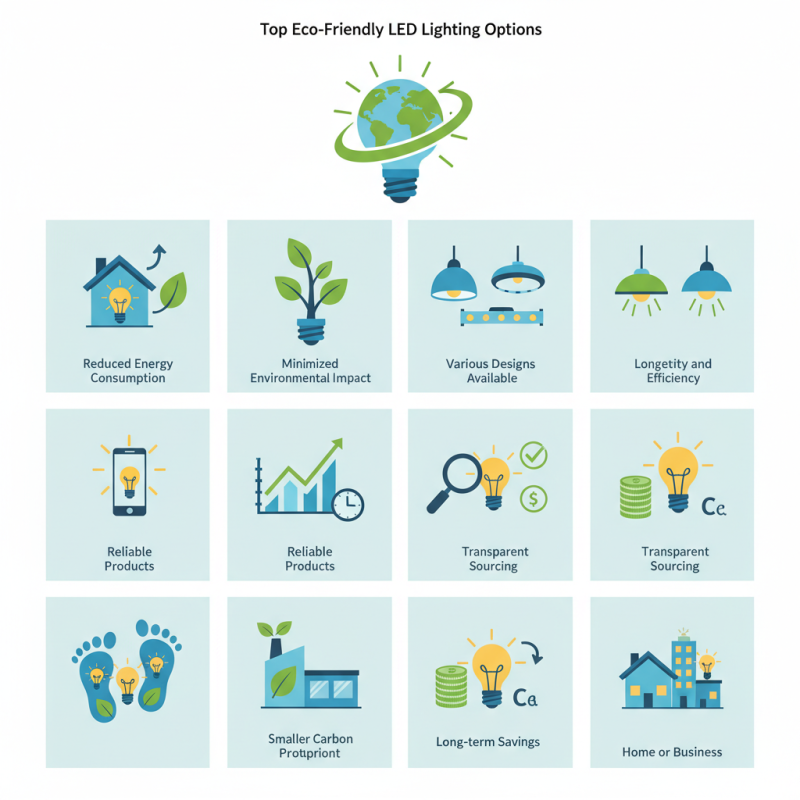
As the world shifts toward sustainable living, Eco Friendly LED Lighting has emerged as a vital solution. These innovative lighting options not only reduce energy consumption but also minimize environmental impact. With various designs available, buyers can find options that fit aesthetic preferences and functional needs.
The demand for Eco Friendly LED Lighting is growing quickly. Many manufacturers are focusing on energy efficiency and longevity. Some products are now available with smart technology integration, enhancing convenience and adaptability for modern lifestyles. However, the market is saturated, making it crucial for consumers to identify reliable products.
Research indicates that not all LED lights are created equal. Quality can vary significantly across brands. Buyers should prioritize brands with transparent sourcing and production methods. Investing in reputable Eco Friendly LED Lighting options can lead to long-term savings and a smaller carbon footprint. It's essential to consider these factors when selecting the right lighting solutions for your home or business.
When looking for eco-friendly LED lighting, many options cater to global buyers. Understanding the benefits and impact of these lights is essential for making an informed choice. These lights consume less energy and last longer than traditional bulbs. They are an excellent step toward sustainability.
A great tip is to check for the lumens-to-watt ratio. Higher lumens mean brighter light for less energy. Look for fixtures made from recyclable materials. This choice helps reduce waste. Many eco-friendly products are designed with a longer lifespan. Despite their efficiency, some may not provide the same warm glow as traditional options.
Consider using dimmable LEDs in your home. They allow you to adjust brightness, saving even more energy. As you explore your choices, remember that the upfront cost may be higher. However, long-term savings on energy bills are significant. Not all options work perfectly for every space, so experimenting with different styles can be beneficial.
| Product Name | Wattage | Luminous Flux (lm) | Lifespan (hours) | Color Temperature (K) | Energy Efficiency Rating |
|---|---|---|---|---|---|
| LED Bulb A | 9W | 800 lm | 25000 | 3000 | A+ |
| LED Downlight B | 12W | 1000 lm | 30000 | 4000 | A++ |
| LED Tube Light C | 18W | 1600 lm | 25000 | 5000 | A+ |
| LED Spotlight D | 5W | 400 lm | 30000 | 3000 | A++ |
| LED Strip Light E | 24W | 1800 lm | 20000 | 4000 | A+ |
| LED Ceiling Light F | 15W | 1200 lm | 30000 | 3500 | A++ |
| LED Flood Light G | 30W | 2800 lm | 50000 | 5000 | A+ |
| LED Garden Light H | 10W | 900 lm | 20000 | 3000 | A++ |
| LED Wall Light I | 12W | 1000 lm | 30000 | 4000 | A+ |
| LED Task Light J | 8W | 600 lm | 25000 | 3500 | A+ |
Eco-friendly LED lighting has become essential in today's world. These lights consume less energy and reduce carbon footprints significantly. They not only provide bright illumination but also promote sustainability. Many households and businesses now prefer LED lighting for its cost-effectiveness and longevity.
Understanding eco-friendly options requires knowledge of their benefits and features. LED lights are made from non-toxic materials, making them safer for the environment. They emit less heat, reducing the need for additional cooling. However, not all LED products are created equal. Some may contain harmful elements, impacting their sustainability. Researching proper certifications is crucial.
Another aspect to consider is their disposal. While LED lights last longer than traditional options, they eventually need to be replaced. Improper disposal can lead to environmental harm. Knowing how to recycle them properly ensures they contribute less waste overall. Balancing quality and cost can be a challenge, but focusing on reliable options pays off in the long run.
When choosing sustainable LED lighting options, key criteria must be considered.
Energy efficiency is paramount.
LEDs consume less power than traditional bulbs, reducing both carbon emissions and electricity bills.
Look for products with high lumens per watt ratios.
Higher ratios indicate better output for less energy.
Material choice is also essential.
Opt for LED fixtures made from recyclable materials.
This minimizes environmental impact over the product's lifecycle.
Additionally, check for certifications like Energy Star or RoHS.
These indicate adherence to environmental and safety standards.
Finally, consider the durability of the LED lights.
Long-lasting products reduce waste and the need for frequent replacements.
However, not all LEDs are created equal.
Some may degrade faster than others.
Research and compare options before making a purchase. It's vital to prioritize transparency and reliability when selecting your lighting solutions.
When choosing eco-friendly LED bulbs for home use, consider their energy efficiency and lifespan. According to the U.S. Department of Energy, LED bulbs use at least 75% less energy than incandescent bulbs. They can last up to 25 times longer, reducing waste. This longevity contributes significantly to a sustainable home.
One crucial point to remember is the color temperature. Most bulbs range from warm (around 2700K) to cool (5000K or more) light. Warm light is ideal for cozy spaces, while cool light works best for work areas. Homeowners should assess their needs before making a purchase.
Tip: Always check for the ENERGY STAR label. It verifies that the bulb meets high energy efficiency standards. Be wary of extremely cheap alternatives; they often fail to provide the expected performance or safety standards. Investing in quality bulbs initially saves money and supports environmental goals in the long run.
Some users report flickering or buzzing from lower-quality LED options. This can lead to frustration and dissatisfaction. It's worth researching customer feedback before buying. Ensure the bulbs are compatible with existing fixtures to avoid any issues. Overall, eco-friendly LEDs can bring significant benefits to your home and the environment if chosen wisely.
Commercial spaces are increasingly adapting to innovative LED lighting solutions, driven by sustainability and efficiency. These options not only reduce energy consumption but also improve the aesthetic appeal of the environment. For instance, smart LED systems can adjust brightness based on natural light levels, enhancing energy savings. Businesses can create a more inviting atmosphere while reducing their carbon footprint.
However, the transition to LED is not without challenges. Some users may find the initial installation costs higher than traditional lighting. This can deter businesses, especially small ones, from making the switch. It’s essential for organizations to analyze long-term benefits versus short-term expenses. The potential for lower maintenance costs and energy bills often offsets the upfront investment.
Moreover, not every LED light source is perfect for every setting. There are varying color temperatures and lumen outputs to consider. Businesses must carefully plan their lighting strategies to match their unique needs. Incomplete understanding of these factors can lead to unsatisfactory results. Continuous education and adaptation are key in maximizing the benefits of LED lighting in commercial spaces.
As the demand for sustainable solutions increases, eco-friendly LED technology stands out. Numerous global brands have made significant strides. They focus on reducing environmental impact while enhancing energy efficiency.
Recent data indicates that LED lights consume up to 75% less energy compared to traditional bulbs. This efficiency significantly lowers carbon footprints. One report from the International Energy Agency predicts that widespread LED adoption could save the world over 1,800 terawatt-hours of electricity by 2030. Such savings illustrate the immense potential of eco-friendly lighting options.
Tip: When choosing LED products, look for certifications like Energy Star or the equivalent in your region. These labels ensure adherence to strict environmental standards. Also, consider the product's lifespan, which can exceed 25,000 hours. This means less frequent replacements and reduced waste.
While many brands strive to innovate, challenges remain in sourcing sustainable materials. Occasionally, some manufacturers might prioritize cost over environmental responsibility. Buyers must stay vigilant and research their options thoroughly. Look for companies committed to transparency about their material sourcing and manufacturing practices.
: Eco-friendly LED lights consume less energy and reduce carbon footprints. They enhance sustainability and provide bright illumination.
Focus on energy efficiency, material choice, and durability. Look for high lumens per watt and recyclable materials in LED fixtures.
No, not all LED products are equal. Some may contain harmful materials. Research certifications to ensure sustainability.
Proper disposal is crucial. Learn how to recycle LED lights to minimize environmental harm and waste.
LED bulbs can last over 25,000 hours. This longevity reduces the need for frequent replacements, which cuts down waste.
Yes, some LEDs may degrade faster. Research products and prioritize transparency when selecting options for lighting solutions.
Certifications like Energy Star ensure products meet environmental and safety standards. They can guide you in making better choices.
Sourcing sustainable materials can be tough. Some may prioritize cost, affecting their commitment to environmental responsibility.
LED lights can consume up to 75% less energy than traditional bulbs, significantly lowering carbon emissions and costs.
Research helps you avoid low-quality options. It ensures you find reliable, sustainable products that align with your values.
The article titled "Top 10 Eco Friendly LED Lighting Options for Global Buyers" provides an in-depth look at the growing importance of sustainable lighting solutions. It begins with a brief overview of eco-friendly LED lighting, highlighting its benefits for both the environment and energy savings. The criteria for selecting sustainable options are discussed, emphasizing factors such as efficiency, longevity, and the use of recyclable materials.
Further, the article outlines the best eco-friendly LED bulbs suitable for home use, demonstrating how individuals can make environmentally conscious choices in their lighting. It also explores innovative LED solutions tailored for commercial spaces, showcasing the versatility and adaptability of eco-friendly lighting in various settings. The discussion wraps up with a look at global brands that are at the forefront of eco-friendly LED technology, illustrating the increasing commitment to sustainability across the industry. Overall, the insights provided serve as a valuable guide for buyers seeking eco-friendly LED lighting options that align with their values and needs.

Cool Light