The shift towards LED light fittings is reshaping home illumination. According to a 2023 report by the Lighting Research Center, energy-efficient LED fixtures can reduce energy consumption by up to 80%. This remarkable statistic highlights their potential for both savings and sustainability. An industry expert, Dr. Maya L. Hart, emphasizes the importance of careful selection: "Quality LED light fittings enhance both aesthetics and functionality in any space."
Choosing LED light fittings requires more than just picking a bulb. There are various factors to consider, including brightness, color temperature, and fixture design. With so many options available, it's easy to feel overwhelmed. This complexity can lead homeowners to make misleading choices. Inadequate understanding of terminology may result in unsatisfactory results, diminishing the benefits LED technology offers.
Finding the right LED light fittings can transform a room. A well-lit space can improve mood and productivity. Yet, many people tend to overlook how critical this decision is. By making informed choices, homeowners can not only enhance their ambiance but can also lead to long-term savings. Understanding product specifications is essential in this rapidly evolving market.
Understanding the Benefits of LED Lighting for Home Use
LED lighting offers numerous advantages for home use.
These lights are energy-efficient, dramatically reducing electricity bills.
By consuming less energy, LED lights are also better for the environment.
They last much longer compared to traditional bulbs. Some can last up to 25,000 hours.
This means fewer replacements, which adds convenience.
Many homeowners overlook how LED lighting can enhance their living spaces.
The brightness and color options can transform a room’s atmosphere.
You can choose warm tones for a cozy feel or bright white for a vibrant look.
However, not all LED fittings are created equal. Some may emit a harsh glare.
Testing a few types before making a decision is wise.
Installing LED fixtures may require careful planning.
Positioning is crucial for optimal light distribution.
Sometimes, people end up with dark spots in their homes.
Experimenting with different placements could solve this issue.
Assessing your needs can prevent overwhelming choices later on.
It’s okay to seek help if uncertain about what fits best.
Identifying Your Lighting Needs and Objectives
When selecting LED light fittings, understanding your lighting needs is essential. Different areas in your home serve various purposes. For instance, the kitchen requires bright, focused lighting for cooking, while the living room may benefit from softer lighting for relaxation. According to a report by the International Energy Agency, residential lighting accounts for about 10% of global electricity consumption. This emphasizes the need to make informed choices.
Take into account the size and color of your spaces. Smaller rooms with darker colors might feel cramped with harsh lights. On the other hand, larger spaces need adequate brightness to feel inviting. A study published in the Journal of Architectural and Planning Research highlighted that the right lighting can significantly affect mood and productivity. Poor lighting can lead to eye strain and discomfort.
Don't forget to consider your long-term goals. Are you aiming for energy efficiency? LED lights offer up to 80% energy savings compared to traditional bulbs, yet some consumers still hesitate. This hesitation often stems from the perceived higher upfront costs. Reflecting on the balance between immediate expenditure and long-term savings can guide your decisions. Evaluate your priorities carefully.
Evaluating the Different Types of LED Light Fittings
When evaluating different types of LED light fittings for your home, consider the functionality and ambiance they create. LED recessed lights are popular for their sleek design. They blend well with ceilings and provide focused lighting. According to the U.S. Department of Energy, using LEDs can reduce energy costs by up to 75% compared to traditional incandescent bulbs. This efficiency is attractive, yet the upfront costs of these fixtures can be higher.
Another option is LED pendant lights, which add character to dining areas or kitchens. They come in various styles and colors, allowing customization for your decor. However, some homeowners find these fixtures hard to clean. The design often traps dust, which can impact light quality.
Wall-mounted LED fixtures are also worth considering for hallways or living rooms. They provide ambient lighting but can sometimes cast shadows in undesirable ways. It's essential to assess the placement carefully. According to industry reports, lighting accounts for roughly 15% of household energy use. Therefore, making informed choices on LED fittings not only enhances aesthetics but also contributes to long-term savings.
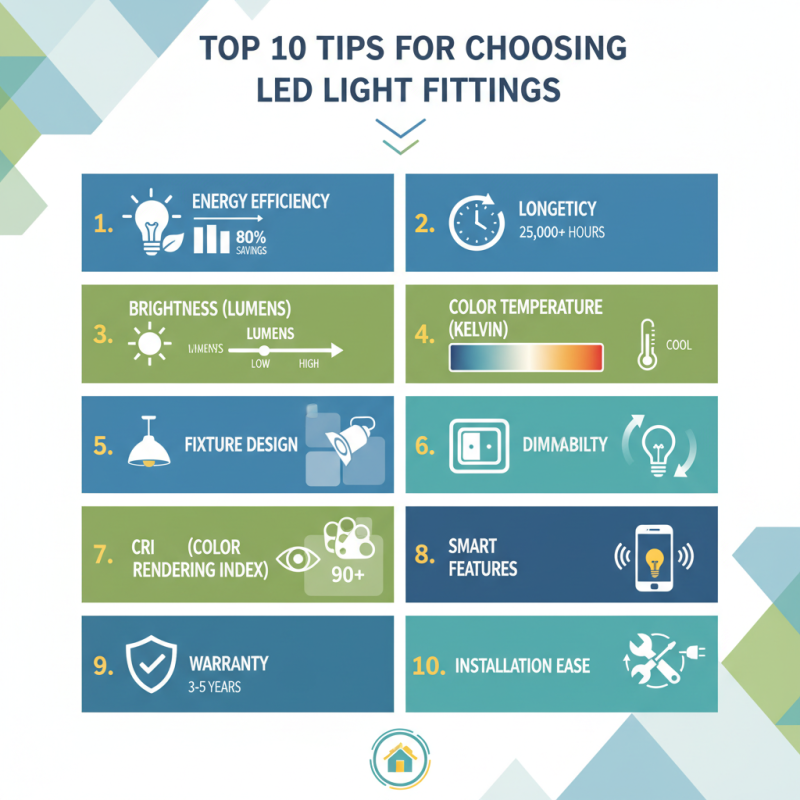
Top 10 Tips for Choosing LED Light Fittings for Your Home
| Tip Number |
Tip |
Considerations |
Benefits |
| 1 |
Determine the Purpose |
Identify the area of use (kitchen, living room, etc.) |
Ensures proper lighting for the intended activity |
| 2 |
Choose the Right Brightness |
Look for lumens rather than watts |
Optimal visibility and comfort |
| 3 |
Select a Suitable Color Temperature |
Warm white (2700K - 3000K) for cozy spaces |
Creates the desired mood and ambiance |
| 4 |
Consider Dimming Options |
Use compatible dimmer switches |
Allows for versatility in lighting levels |
| 5 |
Check for Energy Efficiency |
Look for Energy Star ratings |
Reduces electricity bills and environmental impact |
| 6 |
Evaluate Lifespan |
Check rated hours of operation |
Less frequent replacements, cost savings over time |
| 7 |
Choose a Reputable Manufacturer |
Research brand reliability |
Ensures quality and performance |
| 8 |
Inspect for Flicker-Free Technology |
Look for features that reduce flickering |
Improves eye comfort, reduces fatigue |
| 9 |
Assess Design and Aesthetics |
Consider how it complements your decor |
Enhances visual appeal of your space |
| 10 |
Check for Warranty and Support |
Understand the warranty terms offered |
Peace of mind and product assurance |
Considerations for Energy Efficiency and Cost Savings
Choosing the right LED light fittings can significantly impact both energy efficiency and cost savings in your home. According to the U.S. Department of Energy, LED lights use at least 75% less energy than incandescent bulbs. This energy efficiency translates to reduced electricity bills. If a household replaces 20 incandescent bulbs with LED alternatives, they could save over $400 over the life of the LEDs.
However, it's important to consider initial costs. High-quality LED fittings can be more expensive upfront. Yet, their longer lifespan—often lasting 25,000 hours or more—makes them more economical in the long run. A study by the Lighting Research Center indicates that quality LEDs can result in a 60-80% lower total cost of ownership compared to traditional lighting. This makes investing in LED fittings a prudent decision for budget-conscious consumers.
When selecting LED fixtures, look for Energy Star ratings. These labels ensure that the products meet strict efficiency guidelines. Also, reflect on your home’s unique lighting needs. Be wary of choosing overly bright fixtures in smaller spaces. Balancing brightness and energy efficiency is key. Remember, thoughtful choices lead to better savings.
Exploring Design and Aesthetic Options for LED Fixtures
When selecting LED light fittings for your home,
design and aesthetics play a crucial role. Consider the overall theme of your space.
Are you going for a modern, minimalist look,
or a cozy, rustic feel? Lighting can either enhance or disrupt your design.
For instance, sleek pendant lights can elevate a contemporary kitchen,
while vintage-style sconces may complement a traditional living room.
Pay attention to the materials too. Metals, glass, and even wood can influence the ambiance.
Colors matter significantly in LED fixtures. Warm tones create a welcoming atmosphere.
They are perfect for living areas and bedrooms. Brighter, cooler tones work well in workspaces or kitchens.
Don’t forget about the shape and size of the fixtures. Oversized pendants can be statement pieces,
while recessed lighting provides a subtle touch.
Reflect on the scale in each room. Too small, and the light may feel lost;
too large, it might overpower the space.
Try to explore unique designs that resonate with your personality.
Custom or artisanal fixtures can add character. However, consider practicality.
Some designs may be difficult to clean or maintain.
Look for pieces that balance aesthetics with functionality.
Remember, the perfect lighting should not only look great but also serve its purpose well.
FAQS
: The product aims to enhance user experience and provide practical solutions.
Keep it in a cool, dry place away from direct sunlight.
It's best to consult a healthcare professional. Not all ingredients are listed.
Discontinue use immediately and wash the affected area with water.
Results may vary. Some notice changes within a week, while others might take longer.
It might not be ideal for sensitive skin. Patch testing is recommended.
Returns depend on the vendor's policy. Check the guidelines before purchasing.
Animal testing practices vary by manufacturer. Always check for ethical statements.
Frequency can vary. Follow the instructions or adjust based on your needs.
Use it as soon as you remember unless it's close to the next application.
Conclusion
Choosing the right LED light fittings for your home can greatly enhance both functionality and aesthetic appeal. First, it's essential to understand the benefits of LED lighting, which include energy efficiency, longevity, and reduced environmental impact. Next, identifying your specific lighting needs and objectives will help you determine the best types of LED light fittings to meet your goals, whether for ambient, task, or accent lighting.
When evaluating different LED options, consider factors such as energy efficiency and potential cost savings over time. Finally, exploring design and aesthetic possibilities will allow you to select fixtures that not only illuminate your space but also complement your decor. By following these guidelines, you can make informed decisions that enhance your home while enjoying the numerous advantages of LED light fittings.

 Cool Light