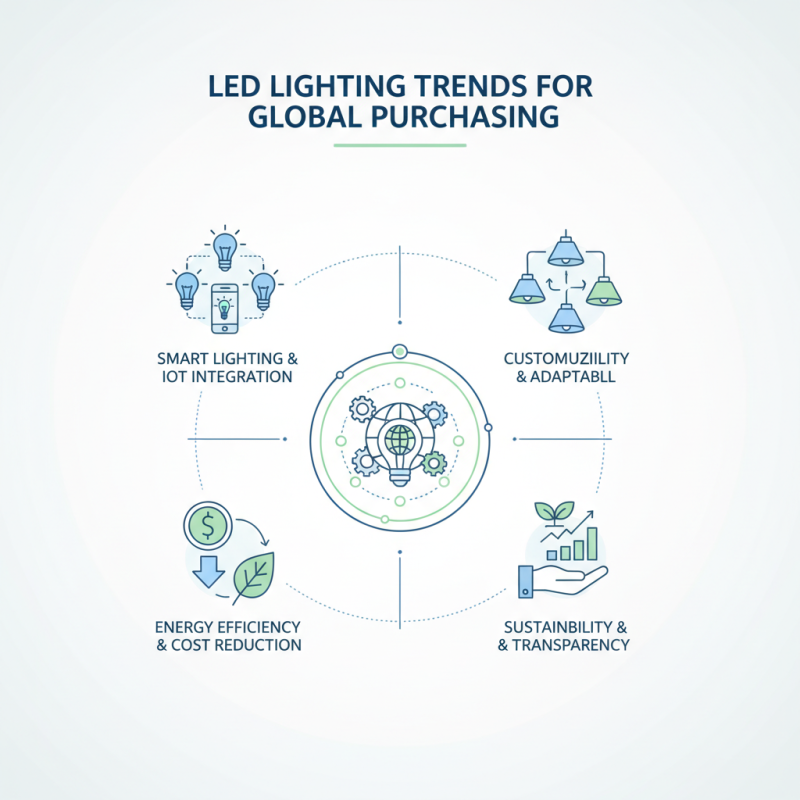
In today's fast-paced market, understanding the emerging LED lighting trends is crucial for global purchasing decisions. The LED lighting industry is evolving rapidly, influenced by technological advancements and consumer preferences. Manufacturers are innovating, offering energy-efficient solutions that not only reduce costs but also enhance environmental sustainability.
The shift towards smart lighting systems stands out in these LED lighting trends. More businesses are integrating lighting with IoT technology. This creates opportunities for improved control and energy management. Increased demand for customizability is evident as consumers seek solutions tailored to their specific needs. Yet, it's essential to navigate these trends carefully, as the market can be overwhelming and complex.
Furthermore, the sustainability aspect cannot be ignored. As companies strive for greener practices, LED technology plays a vital role. However, manufacturers must remain transparent about their production processes and the lifespan of their products. Being aware of these elements is necessary for making informed purchasing decisions in a competitive landscape.
LED technology is evolving rapidly. Innovations in energy efficiency and design are reshaping how businesses approach purchasing. Many companies now prioritize LED solutions that offer both sustainability and longevity. The latest advancements focus on smart technologies, enabling better control over lighting systems.
Wireless connectivity is a growing trend. This allows businesses to manage their lighting in real-time. Adaptive lighting solutions adjust brightness based on occupancy. This flexibility helps save energy and costs. However, integrating smart lighting can pose challenges. It requires investment in infrastructure and training.
Moreover, advancements in color tuning are notable. Purchasers can now choose lights that shift color temperature throughout the day. This creates a more natural and productive environment. Yet, some may find these options overwhelming. The multitude of choices can lead to decision fatigue. Understanding these innovations is crucial for effective purchasing.
The LED lighting market is evolving rapidly. Consumer preferences are shifting, driven by the demand for energy efficiency, sustainability, and design versatility. According to recent reports, 64% of consumers prioritize energy-saving features when purchasing LED products. This insight signals a significant trend that shapes how manufacturers design their offerings.
Tips: Highlight energy efficiency in your marketing. Showcase how your LED products can lower electricity bills and enhance sustainability. Consider that a well-structured product display can attract more buyers.
Additionally, aesthetic preferences play a crucial role. Nearly 50% of consumers prefer lights that complement their home decor. This means brands should focus not only on functionality but also on style. Innovations in smart lighting and customizable color temperatures are crucial. A report by the International Energy Agency indicates that smart lighting can enhance user experience significantly.
Understanding these preferences is imperative for businesses. They should gather consumer feedback and stay updated with design trends. Regularly analyze market reports to adapt strategies accordingly and remain competitive.
Sustainability is becoming a paramount concern in the lighting industry. Eco-friendly LED options are at the forefront of this transformation, driven by a growing demand for energy-efficient products. According to a 2022 report by the International Energy Agency, LED lighting could reduce global electricity consumption by up to 60% by 2025. This transition not only cuts costs but also decreases greenhouse gas emissions significantly.
Many manufacturers are innovating to include recycled materials in their LED products. For instance, some bulbs now incorporate up to 30% recycled content without sacrificing performance. Additionally, eco-friendly LEDs often have longer lifespans, reducing waste over time. However, challenges remain. The initial investment can deter some consumers despite the long-term savings. A study from the U.S. Department of Energy highlighted that, while the upfront costs of LEDs are higher, the return on investment through lower energy bills is substantial over the short term.
An increasing number of building codes are mandating energy-efficient solutions. Companies are facing pressure to adopt sustainable practices. This is essential to meet regulatory requirements and customer expectations. Despite progress, there is a need for more education around the benefits of LED lighting. Many consumers still confuse LED options with traditional incandescent bulbs. Continued outreach and transparent data are necessary to bridge this gap.
When businesses consider LED lighting solutions, cost is always a major factor. Evaluating budget-friendly options requires a deep understanding of the market. Reputable studies indicate that energy-efficient LED lights can lower utility bills by up to 75%. This significant savings translates into better resource allocation for other areas of operations.
Yet, not all LED products are created equal. Some cheaper options may compromise quality and longevity. Opting for less expensive LEDs might decrease initial costs, but may lead to more frequent replacements. A careful analysis of both upfront and maintenance costs is imperative. Calculating the total cost of ownership can prevent unexpected expenses down the line.
Investing in high-quality LED solutions can provide long-term benefits. However, understanding your specific lighting needs is essential. Conducting a site assessment helps identify the amount of lighting required. Engaging with professionals for this can reveal insights that self-assessments often miss. Ultimately, the right balance between cost and quality will enhance both the functionality and aesthetic of business environments.
| Category | Trend | Cost Range (USD) | Energy Savings (%) | Lifespan (Hours) |
|---|---|---|---|---|
| Commercial | Smart LED Controls | 25 - 100 | 30% | 50,000 |
| Industrial | High-Bay LED Lights | 60 - 200 | 50% | 100,000 |
| Residential | Smart Bulbs | 15 - 50 | 40% | 25,000 |
| Outdoor | Solar LED Lights | 20 - 80 | 60% | 20,000 |
| Retail | LED Strip Lights | 10 - 40 | 35% | 30,000 |
The landscape of LED technology is rapidly evolving. Innovations are not just improving efficiency; they are transforming how we illuminate spaces. We see advancements in smart lighting systems, where connectivity meets control. These systems allow users to customize lighting based on their preferences. Imagine changing the ambiance instantly, with just a tap on your smartphone.
Another promising area is human-centric lighting. This approach considers the impact of light on well-being. It tailors light intensity and color temperature to support natural circadian rhythms. Some studies indicate that such lighting can enhance mood and productivity. However, further research is needed to fully understand its effects across different environments.
While the market is trending towards sustainable solutions, challenges remain. The balance between cost and quality often complicates decisions for buyers. Insufficient industry standards can lead to confusion. Stakeholders must navigate this landscape carefully. The future of LED technology holds great potential, but it is essential to remain cautious and informed.
This chart illustrates key trends in LED lighting for 2023, showcasing expected energy efficiency levels, market growth rate, adoption rates, and an innovation index that quantifies advancements in LED technology.
: Businesses must assess costs, quality, and longevity of the options available.
Energy-efficient LED lights can reduce utility bills by up to 75%.
It helps prevent unexpected expenses caused by frequent replacements of low-quality products.
High-quality options provide long-term benefits and reduce maintenance costs over time.
Conducting a site assessment with professionals can reveal specific lighting demands.
Smart lighting systems allow users to customize lighting via smartphone, adjusting ambiance easily.
It's an approach that adjusts light to support natural circadian rhythms for improved well-being.
Yes, the balance between cost and quality complicates decisions and there are insufficient industry standards.
Stakeholders must stay cautious and informed about innovations and market changes.
More studies are necessary to fully understand the effects of human-centric lighting on different environments.
The article "LED Lighting Trends You Need to Know for Global Purchasing" explores key advancements and market dynamics influencing LED technology today. It highlights current innovations that enhance energy efficiency and functionality, providing invaluable insights for purchasers making decisions in this evolving landscape. Understanding consumer preferences is critical, as market trends reveal a growing demand for customizable and aesthetically pleasing solutions in LED lighting.
Sustainability emerges as a crucial aspect, with eco-friendly options gaining popularity due to their environmental benefits. Additionally, the cost analysis section emphasizes budget-friendly solutions that offer both performance and economic advantages for businesses. As we look to the future, the article discusses emerging LED technologies and market predictions that will continue to shape LED Lighting Trends, ensuring that purchasers stay ahead of industry developments.

Cool Light