Interior Commercial Illumination plays a crucial role in the aesthetics and functionality of a commercial space. This type of lighting creates specific atmospheres that can influence customer behavior and employee productivity. Proper illumination enhances the overall appeal of a business, making it inviting and engaging.
The benefits of Interior Commercial Illumination extend beyond mere visibility. Thoughtful lighting design can highlight products or features in a retail environment. It also supports comfort and safety, reducing glare and shadows in workspaces. Businesses can struggle with improper lighting, which may lead to dissatisfaction among staff and customers.
Moreover, advanced lighting technology offers energy-efficient solutions. Sustainable lighting not only lowers energy costs but also contributes to environmental goals. However, it can be challenging to achieve the perfect balance between aesthetics and efficiency. Reflecting on these aspects is essential for any business aiming to optimize their interior spaces with effective illumination strategies.
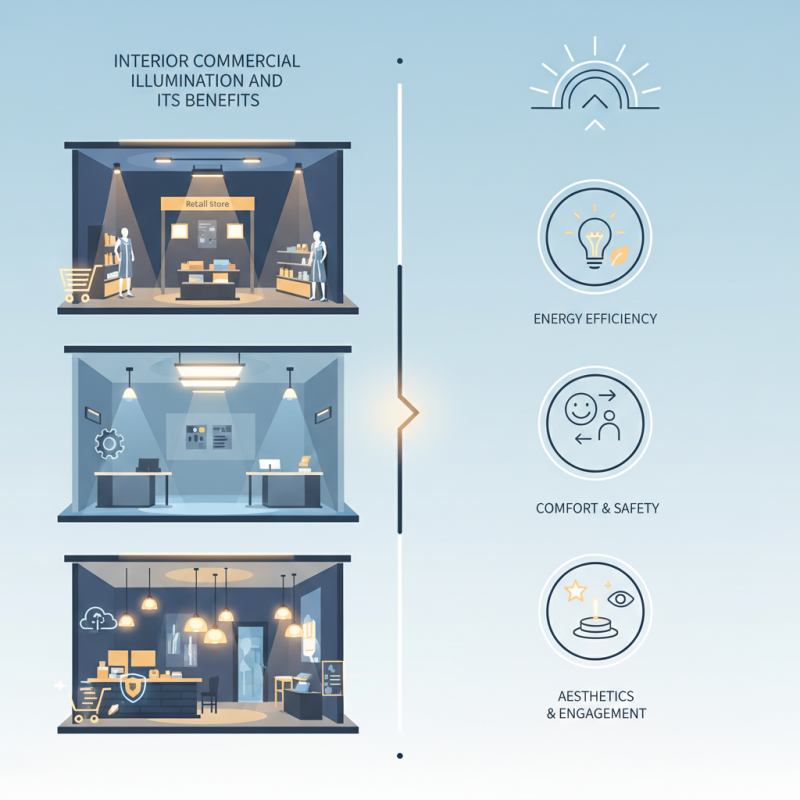
Interior Commercial Illumination refers to the strategic use of light in commercial spaces. It plays a crucial role in enhancing the atmosphere of an environment. This type of illumination emphasizes functionality while considering aesthetics. Proper lighting can improve visibility and create a welcoming ambiance. It directly influences customer experience and employee productivity.
Effective interior commercial lighting uses various techniques. Ambient, task, and accent lighting serve different purposes. Ambient lighting provides overall illumination, making spaces feel open and inviting. Task lighting focuses on specific areas, aiding activities such as reading or working. Accent lighting highlights key features, drawing attention to artwork or architectural designs. Each component works together to create a cohesive environment.
Yet, achieving the ideal balance can be tricky. Too much light can cause glare, while too little can create a gloomy atmosphere. Business owners must reflect on how their lighting affects their clientele and workforce. Choosing the right levels of brightness and color temperature is essential. Proper lighting can be an investment in a brand’s identity and overall functionality. Careful planning is necessary for effective results.
| Aspect | Description | Benefit |
|---|---|---|
| Definition | Interior commercial illumination refers to the effective design and use of lighting in commercial spaces. | Enhances visibility and comfort for employees and customers. |
| Types of Lighting | Ambient, task, and accent lighting are common types used in commercial spaces. | Allows targeted illumination for specific tasks and areas. |
| Energy Efficiency | Modern lighting solutions like LED significantly reduce energy consumption. | Lower utility bills and reduced environmental impact. |
| Design Integration | Lighting can be integrated with the overall design aesthetic of the space. | Creates a more inviting and cohesive environment. |
| Mood Enhancement | Proper lighting can influence the mood of customers and staff. | Fosters productivity and enhances customer experience. |
| Security | Well-lit areas deter theft and enhance safety. | Provides a secure environment for employees and customers. |
: It is the strategic use of light in commercial spaces to enhance atmosphere and functionality.
Proper lighting improves visibility and creates a welcoming environment, influencing customer experience and productivity.
Ambient, task, and accent lighting each serve different purposes, creating a cohesive environment when combined.
Well-designed lighting can increase productivity by up to 20%, reducing eye strain and enhancing work conditions.
Yes, LED lights consume 75% less energy than traditional bulbs and last significantly longer, reducing costs.
Bright, warm lighting makes products appear more appealing, potentially leading to increased sales.
Business owners must reflect on brightness levels and color temperature to avoid overwhelming customers.
While effective, fluorescent lights can produce harsh glare in some settings, which may affect ambiance negatively.
It should be carefully balanced; over-lighting can create chaos, while under-lighting might fail to showcase important features.
Achieving the perfect balance requires reflection and adjustment to ensure an inviting atmosphere for clients and staff.
Interior Commercial Illumination refers to the strategic use of lighting systems within commercial spaces to enhance functionality, aesthetics, and overall ambiance. This illumination encompasses various components, including fixtures, controls, and energy-efficient technologies that work together to create a well-lit environment. Effective lighting plays a crucial role in improving productivity, enhancing customer experience, and promoting safety in workplaces and retail areas.
The benefits of Interior Commercial Illumination span from improved employee morale to increased sales in retail settings. Common types of lighting solutions include ambient, task, and accent lighting, each serving specific purposes to optimize visibility and focus. To achieve the best results, it is essential to follow best practices during implementation, ensuring that the chosen lighting not only meets the needs of the space but also aligns with energy efficiency standards. Ultimately, a well-planned interior commercial illumination strategy can significantly contribute to the success of any business by creating an inviting and functional environment.

 Cool Light