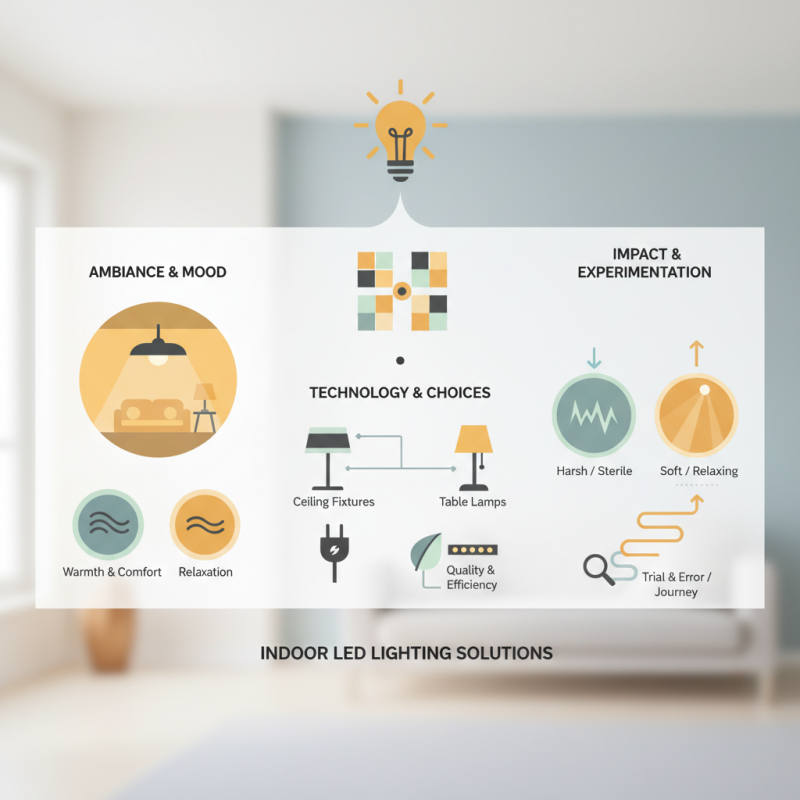
When it comes to enhancing the ambiance of our homes, finding the right "Indoor LED Lighting Solutions" is crucial. Lighting expert Sarah Thompson once stated, “Good lighting can transform any space.” This idea rings true as the right LED solutions can create warmth and comfort in any room.
LED technology has evolved rapidly in recent years. Homeowners now have a variety of options to consider. From sleek ceiling fixtures to warm table lamps, the choices can be overwhelming. However, focusing on quality and efficiency is essential. Choosing the wrong product can lead to disappointment, detracting from a room’s overall appeal.
Many overlook how lighting impacts mood and productivity. For example, harsh lights can create a sterile environment, while softer lights promote relaxation. It’s important to experiment with different shades and intensities. Finding the best fit is often a journey of trial and error. Embracing this process helps create spaces that truly feel like home.
Best Indoor LED Lighting Solutions: Key Benefits and Features
When considering indoor LED lighting solutions, it's essential to understand their key benefits and features.
LED lights are known for energy efficiency. They consume less power, which can significantly lower your electricity bills.
This is especially appealing for those who want to minimize energy costs. Longevity is another important feature. LEDs can last up to
25,000 hours or more. This reduces the frequency of replacements, saving both time and money in the long run.
In addition to efficiency, LEDs offer versatility. They come in various colors and intensities.
This allows homeowners to create the perfect ambiance in any room. From cozy warm whites for living areas to
bright cool whites for kitchens, the options are vast.
However, the color rendering can sometimes be less than ideal. Certain LEDs may not show colors as accurately as traditional bulbs.
Considering this, one should test different options before settling on a final choice.
Another benefit is safety. LED lights emit less heat compared to incandescent bulbs.
This reduces the risk of burns or fire hazards. However, some may find the initial cost higher than traditional lighting.
It’s important to weigh the initial investment against the long-term savings.
Overall, navigating the world of indoor LED solutions requires thoughtful consideration.
Choose wisely to enhance your home while reflecting personal style.
Types of Indoor LED Lights: A Comprehensive Overview for Home Use
Indoor LED lights come in various types, each serving unique purposes in your home. Recessed lighting can elegantly blend into your decor. It provides an unobtrusive source of light. Track lighting offers flexibility, allowing adjustable spotlights to illuminate art or features. It can be challenging to position correctly, though.
Another popular choice is pendant lighting, perfect for kitchens and dining areas. These lights hang from the ceiling and create a focal point. Their style can vary, but selecting the right size is crucial. Overly large fixtures can overwhelm a space.
Wall sconces add ambiance and are great for hallways or cozy nooks. But placement matters; too high can waste light.
Finally, smart LED bulbs bring innovation to your home. They enable remote control and customization. However, setup might be tricky for some. Homeowners must consider power requirements and compatibility.
Each type of indoor LED light has pros and cons. Finding the best fit requires careful thought and experimentation.
Energy Efficiency of LED Lighting: Savings and Environmental Impact
LED lighting has revolutionized indoor spaces, offering better energy efficiency. According to the U.S. Department of Energy, LED lights use about 75% less energy than incandescent bulbs. This dramatic reduction translates to significant savings on energy bills. Households can save an average of $225 a year simply by switching to LEDs. Such figures showcase the financial benefits and align with growing environmental concerns.
Fewer carbon emissions are another important aspect. A report from the Environmental Protection Agency estimates that widespread adoption of LED lighting could result in a reduction of coal-fired electricity generation, equivalent to eliminating 24 million cars from the roads. Yet, the industry still faces hurdles. Not every LED option is created equal; some may underperform or not last the promised lifespan. It's crucial to research products and their claims thoroughly. Consumers need to balance cost, quality, and energy savings. In an industry where innovation is rapid, understanding differences in performance is essential for making informed choices.
Selecting the Right LED Color Temperature for Different Rooms
When choosing LED color temperature for different rooms, it’s essential to consider how light impacts mood and functionality. Research indicates that warm white light, typically around 2700K to 3000K, is ideal for living areas. It creates a cozy atmosphere, encouraging relaxation. On the other hand, kitchens and workspaces often benefit from cooler light, ranging from 3500K to 4100K. This spectrum promotes alertness and focus, perfect for meal prep or tasks.
In bedrooms, choosing the right LED temperature is crucial. Soft, warm lighting around 2200K is preferred for winding down. It enhances comfort before sleep, supporting natural circadian rhythms. However, ambient lighting can sometimes feel too flat. Mixing warmer tones with dimmable options offers versatility, allowing for both relaxation and activity.
Moreover, don’t forget about lighting reflectance. Darker rooms might absorb more light, leading to a need for brighter bulbs or higher lumen output. A balance is key. If the light feels harsh, it can lead to eye strain. Aim for a gentle blend that suits your daily routines and personal preferences. Lighting should feel right, not forced. Each space has its own identity, and your choices can enhance or detract from that experience.
Best Indoor LED Lighting Solutions for Home
Future Trends in Indoor LED Lighting: Innovations and Smart Technology
The future of indoor LED lighting is bright and filled with potential. Innovations in smart technology are dramatically changing how we interact with lighting in our homes. Imagine adjusting the brightness and color temperature of your lights with a simple voice command. This convenience may soon become the norm. Control over lighting conditions can create different moods in any room.
Smart LEDs also promise to be more energy-efficient. They can automatically adjust based on natural light levels. For instance, they might dim as the sun sets, conserving energy in the process. However, some users still struggle with intelligent systems that can be overly complicated. The user experience can feel fragmented, leading to frustration. It's crucial for technology to be intuitive, even as it becomes more advanced.
Moreover, the integration of sensors could enhance security. Lights may turn on when they detect movement, providing peace of mind. Yet, there can be issues with false alarms, which may lead individuals to distrust their systems. Balancing innovation with reliability is essential. Overall, the evolution of indoor LED lighting is not just about brightness. It's about creating a seamless living experience that adapts to our needs, even when it doesn’t always work perfectly.
FAQS
: The article discusses various aspects of a specific lifestyle.
Anyone interested in improving their lifestyle choices can benefit.
Begin with small adjustments in daily habits and routines.
Yes, the article suggests practical tips for daily improvement.
It's common to face challenges. Reflect on your goals regularly.
Changes can take time. Be patient and persistent in your efforts.
Yes, sharing experiences with others can enhance motivation and accountability.
Yes, many overlook the importance of gradual progress.
Look for community programs or online platforms focused on this lifestyle.
Setbacks are part of the process. Analyze what went wrong and adjust.
Conclusion
Indoor LED Lighting Solutions offer a versatile and energy-efficient way to illuminate your home. These lighting options provide numerous benefits, such as reduced energy consumption and a longer lifespan compared to traditional bulbs. A comprehensive overview of different types of indoor LED lights highlights their suitability for various rooms, ensuring optimal brightness and ambiance in each space.
Choosing the right LED color temperature is essential for creating the desired atmosphere, whether it be a warm, relaxing environment in the living room or a bright, stimulating setting in the kitchen. Furthermore, advancements in technology and the integration of smart solutions are shaping the future of indoor LED lighting, allowing for enhanced control and personalization. Embracing these innovative Indoor LED Lighting Solutions not only leads to substantial energy savings but also contributes positively to environmental sustainability.

 Cool Light