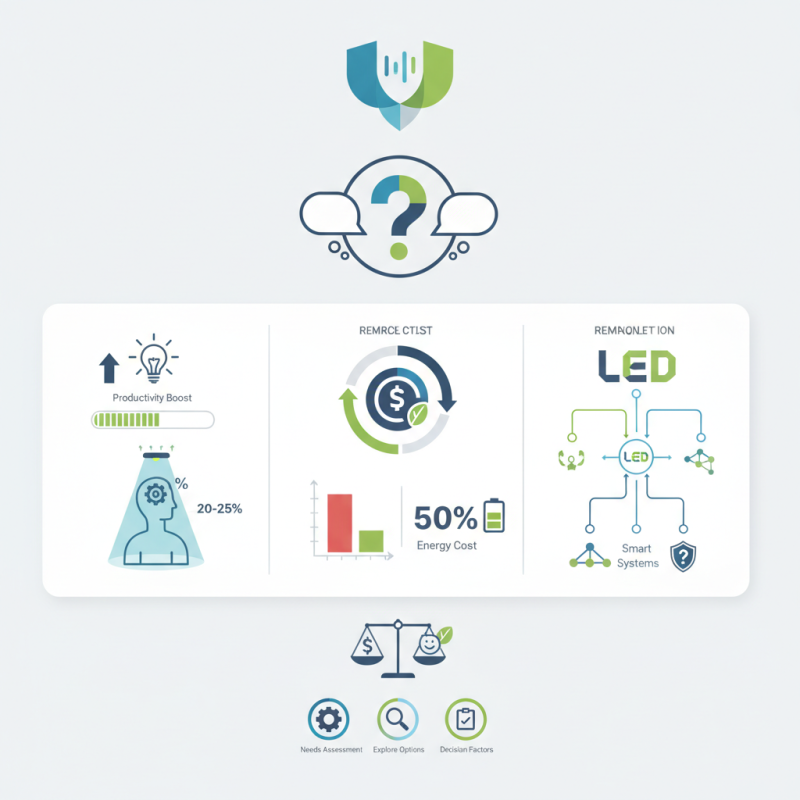
In today’s competitive marketplace, effective Commercial Lighting Solutions are essential for businesses aiming to enhance productivity and customer experience. According to a report by the Illuminating Engineering Society, proper lighting can boost employee productivity by 20% to 25%. Yet, many businesses underestimate this potential. Optimizing lighting is not just about aesthetics; it directly impacts mood and efficiency.
Data from the U.S. Department of Energy shows that smart lighting technologies can reduce energy costs by up to 50%. This statistic highlights the financial advantage of investing in high-quality lighting systems. However, many companies still rely on outdated solutions. They face challenges in balancing cost with effectiveness.
It’s clear that finding the best Commercial Lighting Solutions involves navigating complexities. Businesses must assess their unique needs and explore various options. Whether choosing LED options or integrated smart systems, the choices are vast. However, making the right decision can be daunting. It requires careful consideration of factors such as energy efficiency and employee well-being.
When considering the best commercial lighting solutions, it’s essential to understand the types available. Each type serves a specific purpose. For instance, ambient lighting provides general illumination, creating a comfortable environment. It’s often used in offices and retail spaces to ensure visibility.
Task lighting is another crucial type. This solution focuses on specific areas to help employees with detailed tasks. Desk lamps and under-cabinet lights in kitchens exemplify this concept. It's vital to balance task lighting without overwhelming the space.
Accent lighting highlights features, products, or art. Focusing on specific areas can create drama and attract attention. However, it can also lead to uneven lighting, which may need adjustments. Considering the color temperature is important as well. Different temperatures can evoke various moods. Finding the right lighting combination is often a trial-and-error process, but essential for effective commercial spaces.
When selecting commercial lighting solutions, several factors must be considered. The type of business greatly influences the choice of lighting. For instance, retail stores often require bright, attractive displays. Meanwhile, offices benefit from softer, ambient lighting to reduce eye strain. According to a report by the American Lighting Association, appropriate lighting can boost employee productivity by up to 20%.
Energy efficiency is also crucial. Energy-efficient LED lights consume up to 75% less energy than traditional bulbs. This not only reduces electricity costs but also minimizes heat output. Reducing energy consumption aligns with sustainable practices and can enhance your business's reputation.
Tip: Create lighting that adapts to different tasks. Use adjustable fixtures to meet varied lighting needs throughout the day.
Another essential aspect is color temperature. Warmer lights tend to create a cozy atmosphere, conducive for dining or hospitality businesses. Cooler lights, however, can energize a workspace. Balancing these elements requires attention.
Tip: Test different lighting setups before fully committing. Experimenting can reveal unexpected results and improve the ambiance.
| Lighting Type | Key Features | Benefits | Ideal Use Cases |
|---|---|---|---|
| LED Lighting | Energy-efficient, long lifespan, low heat emission | Cost savings on energy bills, minimal maintenance required | Retail stores, offices, warehouses |
| Fluorescent Lighting | Low initial cost, variety of sizes | Good for general lighting, easy to replace | Basements, garages, office buildings |
| Incandescent Lighting | Warm light, low upfront cost | Pleasant ambiance, easy to find replacements | Restaurants, hotels, home-like settings |
| Halogen Lighting | Brighter than incandescent, longer lifespan | Enhanced color rendering, high-quality light | Art galleries, retail displays, specialty shops |
| Smart Lighting | Wireless control, scheduling, energy management | Customizable lighting, energy efficiency | Modern offices, smart homes, tech-savvy environments |
Selecting the right commercial lighting can significantly impact energy efficiency and cost savings for your business. Utilizing LED technology, for instance, can reduce energy consumption by up to 75%. These lights last longer and need less frequent replacement. Imagine the savings on maintenance costs.
However, it’s essential to assess your specific needs before making a switch. Not every space benefits from the same lighting solution. Some areas might require brighter light, while others thrive in softer illumination. Testing different options can be a trial-and-error process, yet it's crucial for maximizing efficiency.
Energy-efficient systems may have a higher initial investment. Yet, the long-term savings are undeniable. Businesses often overlook this; they focus on upfront costs rather than future expenses. Reflecting on your choices can lead to better budgeting decisions. Exploring smart lighting controls can further enhance efficiency, allowing for adaptive lighting based on occupancy. This fine-tuning can push your cost savings even higher.
The landscape of commercial lighting technology is rapidly evolving. New innovations focus on energy efficiency and aesthetic appeal. Businesses now prioritize solutions that not only illuminate but also enhance their environment. This trend leads to the adoption of smart lighting systems. These systems allow for automation and better control of energy use.
LEDs continue to dominate due to their long lifespan and low energy consumption. They provide high-quality light and are versatile in application. Integrating sensors into these systems is gaining traction. They can adjust lighting based on occupancy or time of day, optimizing energy savings. However, some businesses struggle to implement these technologies effectively. Understanding the complexities of integration can be daunting.
Sustainable materials and designs are also trending in commercial lighting. More companies are focusing on creating a positive impact. This includes using environmentally friendly products. Yet, challenges remain in balancing cost with sustainability. Companies often hesitate to invest in higher upfront costs for long-term savings. It’s important to weigh these decisions carefully, ensuring they align with the business's goals.
When it comes to commercial lighting systems, installation and maintenance are crucial. Proper installation can significantly impact the effectiveness of lighting in a business. Start by assessing the space. Measure ceiling heights and consider the layout. The type of fixtures matters too; some spaces may benefit from recessed lights, while others might need pendant or track lights. Ensuring that the fixtures are positioned correctly will help create an even distribution of light.
Regular maintenance is essential to keep lighting systems efficient. Replace burnt-out bulbs promptly to avoid dim spots. Dust and clean fixtures often. This simple act can improve light quality and extend the lifespan of bulbs.
Sometimes, businesses overlook the importance of scheduling professional inspections. These can identify potential issues before they become serious problems. Reflecting on the current setup can lead to improvements; perhaps a certain area feels darker. This indicates a need for adjustment or additional lighting.
: Key types include ambient, task, and accent lighting. Each serves a specific purpose in a space.
Ambient lighting provides general illumination, ensuring visibility and comfort, especially in offices and retail areas.
Task lighting focuses on specific areas, like desks or kitchens, to aid employees with detailed tasks.
Accent lighting highlights features or products, creating drama, but it may cause uneven lighting that needs adjusting.
Trends include energy efficiency, smart systems, and integrated sensors for optimizing energy use and control.
Implementing smart technologies can be complex, often deterring businesses due to the intricacies involved.
Regular maintenance, like cleaning fixtures and replacing bulbs, is crucial for ensuring efficiency and extending bulb lifespan.
Businesses should assess the space carefully, considering ceiling height, layout, and type of fixtures for effective distribution.
Reflecting on the setup can reveal the need for adjustments or additional lighting to improve brightness.
Although they may have higher upfront costs, sustainable options can provide long-term savings and reduce environmental impact.
When choosing the best Commercial Lighting Solutions for your business, it’s essential to understand the various types available, such as LED, fluorescent, and incandescent options. Each type has its pros and cons, making it crucial to evaluate your specific needs. Key factors to consider include the nature of your business, lighting goals, and the ambiance you want to create. Additionally, energy efficiency and cost savings should drive your decision, as modern lighting technologies can significantly reduce long-term operational expenses.
Current trends and innovations in commercial lighting emphasize sustainability and smart technology, promoting not only efficiency but also enhanced control over lighting systems. Best practices for installation and maintenance ensure that your lighting operates at optimum performance, extending its lifespan and reducing energy consumption. By focusing on these aspects, businesses can effectively select and implement the ideal Commercial Lighting Solutions that align with their operational goals and environmental commitments.

Cool Light