In the realm of commercial spaces, effective lighting plays a crucial role in creating inviting environments. A recent report by the Lighting Research Center highlights that 70% of customers feel more comfortable in well-lit spaces. This shows the power of Commercial Ceiling Lighting. It is essential for both functionality and ambiance.
Expert Thomas Blake, a leader in lighting design, noted, "Proper ceiling lighting can transform a business's atmosphere." His insight reflects the importance of selecting the right fixtures. The variety of options can be overwhelming, and not every choice fits every space.
Furthermore, balancing energy efficiency with aesthetic appeal is challenging. Many businesses are shifting towards LED solutions to reduce costs and environmental impact. Yet, the initial investment can be a barrier for some. Choosing the best Commercial Ceiling Lighting requires careful consideration of both short-term and long-term effects on the business environment.
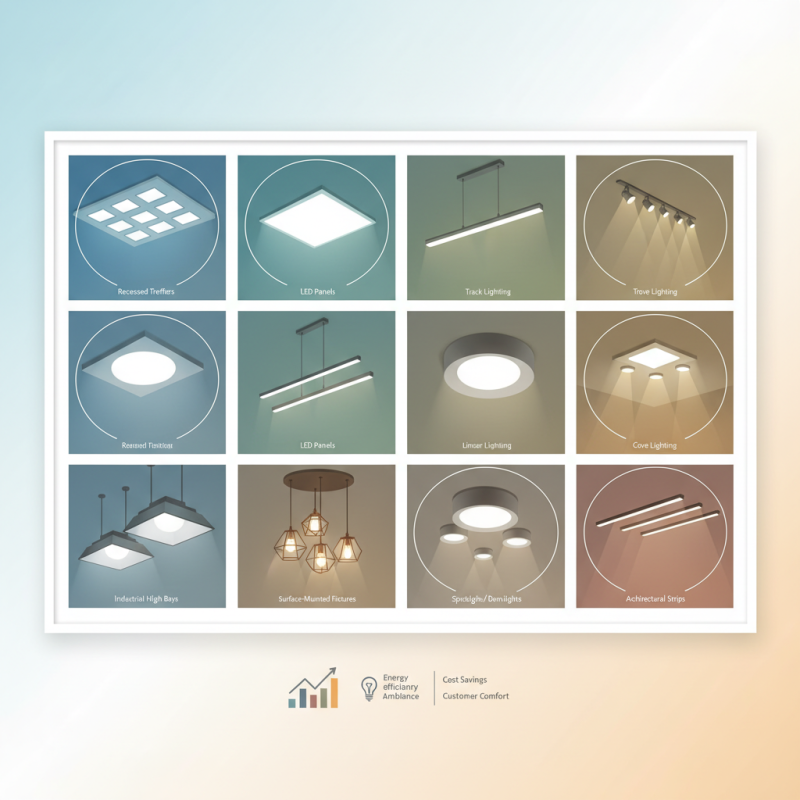
Choosing the right commercial ceiling lighting can drastically enhance a business's environment. Different types of lighting are suitable for various settings. For instance, in retail, track lighting can highlight products effectively. It draws attention to displays, making items more appealing to customers. However, ensure the lights are not too harsh; it may create an uncomfortable shopping experience.
In office spaces, recessed lighting is a popular choice. It provides a clean look without taking up ceiling space. This type of lighting reduces clutter and can enhance productivity. Yet, some offices still rely on fluorescent lights, which can be overwhelming. The challenge lies in finding a balance. In restaurants, pendant lighting creates a cozy atmosphere, but poorly placed fixtures can cast unwanted shadows. Thoughtful design and placement are crucial here. Finding the perfect lighting solution often involves trial and error.
When selecting ceiling lighting for your business, several factors are crucial. The type of space you operate in will dictate the optimal lighting solution. For instance, a retail environment typically benefits from brighter, more focused light to highlight products, while an office space may require softer, more ambient lighting for comfort. According to the International Energy Agency (IEA), lighting can account for 20% of a commercial building's energy use. Hence, energy efficiency should also be a priority in your selection.
Consider the color temperature of the bulbs as well. Reports suggest that warmer lights (around 2700K to 3000K) enhance comfort and are suitable for restaurants. In contrast, cooler lights (above 4000K) can improve productivity in work settings. The Illumination Engineering Society indicates that the wrong lighting can lead to eye strain and decreased employee performance. It’s essential to balance aesthetic appeal with functionality.
Dimmer switches can also significantly affect the atmosphere. Adjusting the lights can create a more inviting experience for clients and employees. However, not all systems are compatible with dimmer technology. So, compatibility is something to investigate cautiously. Inadequate planning can result in costly renovations later on. Pay attention to the layout too; lighting often needs to be layered to achieve balance. Each space has unique requirements, so a tailored approach is necessary.
Choosing the right commercial ceiling lighting is crucial for any business environment. Selecting an effective model can improve productivity and enhance customer experience. According to industry reports, proper lighting can boost sales by up to 20%. With a range of brands and models, it's essential to find the right fit.
Many businesses overlook their lighting options. Brightness should match the ambiance you want to create. Too harsh, and it can drive customers away. Too dim, and productivity may drop. Understanding the light's color temperature is also key. A warmer light creates a cozy feel, while cooler tones energize a space.
Consider energy efficiency when selecting ceiling lights. LED options last longer and save on electricity costs. According to a study by the Department of Energy, replacing old models with LED lights can reduce energy consumption by 75%. In addition to cost savings, they produce less heat, which can lower cooling bills.
Tips: Measure the ceiling height before purchasing fixtures. This helps ensure you choose the right style and size. Verify the lumen output for the space. Not all areas require the same lighting intensity. Regularly review your lighting situation to adapt to changing business needs.
In today's business environment, energy efficiency and sustainability are crucial. Commercial lighting options have evolved significantly. Choosing the right lighting can drastically reduce energy consumption. This not only lowers utility bills but also reduces your carbon footprint.
LED lights are an excellent choice. They consume less energy and last longer than traditional bulbs. However, their initial cost may deter some businesses. Investing in these lights pays off in the long run. Additionally, consider using smart lighting systems. These systems adjust brightness based on occupancy, leading to further energy savings.
It's essential to balance aesthetics with functionality. For instance, bright white lights can enhance productivity in workspaces. However, they may create a harsh environment. Soft, warm tones can make spaces inviting, yet may not provide adequate visibility in some areas. Businesses often overlook these nuances in their quest for sustainability. It’s crucial to reflect on the overall impact of lighting choices on both the environment and employees.
| Lighting Type | Lumens Output | Wattage | Energy Efficiency (Rated) | Lifespan (hours) | Sustainability Features |
|---|---|---|---|---|---|
| LED Troffer Lights | 4000 | 40 | A+ | 50,000 | Recyclable materials, low heat emission |
| Fluorescent Ceiling Lights | 3500 | 32 | B | 20,000 | Contains less mercury than older models |
| Smart LED Panels | 4500 | 38 | A++ | 60,000 | Dimmable, customizable color temperature |
| Suspended LED Lights | 5000 | 50 | A+ | 50,000 | Made from recycled materials |
| Recessed Lighting | 3000 | 25 | A++ | 50,000 | Flexible installation, low impact design |
| High Bay LED Lights | 7000 | 70 | A+ | 50,000 | Long-lasting, energy-saving technology |
| Surface Mount LED Lights | 4000 | 30 | A+ | 50,000 | Quick installation, dimmable options |
| LED Track Lighting | 2500 | 20 | A+ | 30,000 | Adjustable light direction, focused beam |
| Cove Lighting Systems | 2000 | 15 | A+ | 50,000 | Indirect lighting, enhances ambiance |
| Panel Lighting Systems | 3000 | 25 | A++ | 50,000 | Low energy consumption, uniform light distribution |
When choosing commercial ceiling lighting, installation and maintenance are critical.
Studies show that poor lighting can decrease productivity by up to 28% in workplaces.
It is essential to ensure proper installation to achieve optimal performance.
Follow electrical codes and safety standards for compliance. Use a professional installer when necessary.
This can prevent future issues and ensure longevity.
Regular maintenance is also vital.
Inspect fixtures for dust and debris, as buildup can reduce light output significantly.
A report from the International Association of Lighting Designers states that maintaining clean fixtures can enhance lighting efficiency by as much as 25%.
Check for flickering lights or color inconsistencies, which may indicate a problem.
Consider upgrading to LED options, as they provide longer life and lower energy costs.
However, even LEDs require periodic checks. Battery backups for emergency lighting need attention too.
Neglecting maintenance can lead to costly replacements.
This highlights the need for a proactive maintenance plan.
Regular checks can identify issues early, saving time and resources in the long run.
: This product can serve multiple purposes. Users often utilize it for everyday tasks and special events.
Cleaning might require some effort. Some residues can be stubborn. A regular maintenance routine helps maintain its appearance.
Longevity varies by usage. Some users find it lasts a long time with care, while others report quicker wear.
It is suitable for outdoor use, but exposure to extreme conditions might affect functionality.
The product is constructed with various materials. Each material has its benefits and limitations, based on the intended use.
There are multiple sizes to choose from. However, not all sizes may meet individual needs perfectly, causing some frustration.
While generally safe, supervision is recommended. Some parts may pose a risk if misused or handled incorrectly.
Proper storage is key for longevity. Some users suggest keeping it in a dry place, away from direct sunlight.
Yes, versatility is a feature. Nevertheless, it might not excel in every intended function, which requires user reflection.
The warranty covers defects. Users should read the fine print, as it may not cover every type of damage.
When selecting the best commercial ceiling lighting for your business, it's essential to understand the various types available and how they suit different environments. From recessed lights to pendant fixtures, each type offers unique benefits that can enhance the aesthetic and functionality of your space. Factors such as brightness, color temperature, and design style should also be considered to create an inviting atmosphere tailored to your business's needs.
In addition, energy efficiency and sustainability have become crucial in choosing commercial ceiling lighting solutions, helping businesses reduce operational costs while being environmentally responsible. Installation and maintenance tips are vital for ensuring the longevity and performance of your lighting system, making it easy to manage and adjust as your needs evolve. By carefully evaluating these aspects, businesses can select the ideal commercial ceiling lighting that aligns with their goals and enhances their overall space.

Cool Light