Lighting shapes how shoppers read a store before they touch a product. In 2026, good retail lighting must do more than make shelves visible. It should support navigation, reveal accurate product colors, and create a comfortable atmosphere from the entrance to the checkout. Small details matter. A bright display beside a dim aisle can feel confusing, even when each fixture looks attractive on its own.
These Retail Space Lighting Design Tips focus on decisions that can be tested in real spaces: layering ambient, task, and accent light; choosing color rendering that suits merchandise; controlling glare on glass and polished counters; and adjusting color temperature to fit the brand and time of day. A warm fitting-room scene may feel welcoming, while a crisp beam can help a featured sneaker stand out. Yet stronger light is not automatically better. Too much contrast tires the eyes, and poorly aimed spots can create harsh shadows on faces or labels.
The sections ahead connect design choices with practical installation and operating concerns, including dimming, daylight, maintenance, and energy use. Start with a lighting plan, then check it at shopper eye level and after dark. A render cannot show every reflection. Real stores are messier. That is worth admitting. Use these ideas as a grounded starting point, not a fixed formula; ceiling height, window direction, merchandise, and customer behavior all change what works. When possible, review a mock-up with staff and customers before repeating the layout across every location.
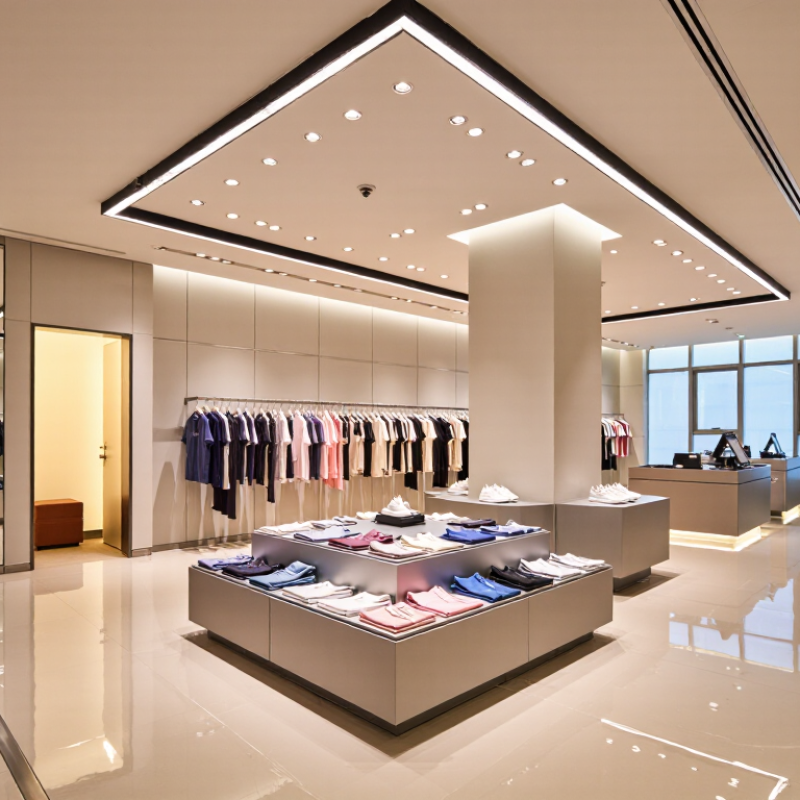
Lighting does more than illuminate merchandise. It helps shoppers navigate, notice featured products, and judge colors and textures. At the entrance, balanced light can make the transition from a bright street feel comfortable. Inside, even ambient lighting supports browsing, while focused accents draw attention to a display or product detail. The difference is noticeable.
A useful plan layers these functions rather than relying on one bright ceiling grid. Aim task lighting at checkout counters and fitting-room mirrors, where clear visibility matters. Use accent lighting selectively; too much contrast can make nearby shelves feel dull. Check glare from standing and seated eye levels, and look for shadows cast by fixtures onto faces or products. Details matter.
Color quality also affects how merchandise appears, especially fabrics, cosmetics, and food. Test samples under the proposed lighting before settling on a color temperature or fixture position. Keep illumination consistent enough for shoppers to compare items, but allow focal areas to stand out. There is no perfect setting for every store: a dramatic display may attract attention yet feel tiring if the rest of the space is too dim. Revisit the layout after displays change, because lighting that worked last season may now miss the product.
Start with the floor plan, not the fixture catalog. Mark entrances, checkout queues, decompression space, and aisle pinch points. Observe where shoppers pause, turn back, or cross paths during busy and quiet periods. These movements show where light should guide, clarify, or stay quiet. Watch the doorway. A bright display just inside can compete with the adjustment from outdoor daylight.
Map merchandise by viewing distance and task. A folded knitwear table needs soft, even light that reveals texture; small labels need precise illumination. Light shelves and faces vertically, while controlling glare on glass and glossy packaging. The Illuminating Engineering Society’s RP-2-20, Lighting Retail Spaces, offers application guidance; use it alongside measured site conditions. One ceiling grid rarely fits every department.
Energy matters, too. The U.S. Energy Information Administration’s 2018 Commercial Buildings Energy Consumption Survey estimates lighting accounted for about 17% of electricity use in commercial buildings. Equal brightness is rarely necessary. Aim light at merchandise and route cues, then check contrast and uniformity after installation. Compare readings and customer paths at peak and off-peak times. It is easy to over-plan. A display that looks clear in a rendering may cast a hard shadow when someone stands close.
Indicative target illuminance levels help balance comfortable customer circulation with clear product visibility and focused checkout areas.
Use these values as starting points, not universal requirements. Adjust for merchandise, surface reflectance, daylight, glare control, and applicable local standards.
A well-lit store feels comfortable before shoppers notice the fixtures. Start with ambient lighting that gives aisles and displays an even base. Avoid bright pools beside dim corners; the contrast can make merchandise harder to read. Neutral wall finishes and pale ceilings help distribute light, while dark surfaces may absorb more than expected. Keep it subtle.
Add task lighting where people need to inspect details: fitting-room mirrors, checkout counters, and shelves with small labels. Aim fixtures carefully to reduce glare on glossy packaging and screens. For apparel, compare fabric colors under the planned lighting before installation. A high color-rendering rating can help, but real samples reveal problems a specification may miss.
Accent lighting draws attention to feature tables, new arrivals, or textured materials. Use a narrower beam or a modest brightness contrast, rather than spotlighting every product. Too many highlights compete, and shoppers may not know where to look. Put ambient, task, and accent layers on separate controls when practical; staff can adjust them for daylight changes or seasonal displays. Test after dusk. Then walk the store at shopper height, checking for shadows, reflections, and awkward dark patches. A layout can look balanced on a drawing and still feel uneven in person, so leave room to revise.
Retail lighting should make products easy to read while keeping the store comfortable. Start by matching color temperature to the merchandise and interior finishes. Warm white light can soften wood, leather, and clothing displays. Neutral white often suits groceries, cosmetics, and clean-lined spaces. Very cool light may make skin tones or warm materials look harsh. Test samples beside actual products before selecting a store-wide setting.
Brightness depends on the task, not just the room size. Use brighter, focused light on feature tables and signs, while keeping aisles evenly lit. Check for glare on glossy packaging, glass, and screens from a shopper’s eye level. High color rendering can help colors appear more faithful, especially near clothing or makeup. The right choice still needs an in-store check; drawings rarely show every reflection. Some corners may feel dimmer than expected.
2026 Top Retail Space Lighting Design Tips for Stores
Using Smart Controls for Efficiency and Flexibility
Smart lighting controls help stores respond to changing daylight, customer traffic, and daily tasks. Dimming can reduce output near bright windows while keeping deeper aisles comfortable to navigate. Occupancy sensors may suit stockrooms, but they can frustrate shoppers if they switch off in quiet fitting areas. Small changes matter. Group fixtures by zone, not by the entire sales floor, so staff can adjust displays without dimming checkout counters.
Tips: Set simple scenes for opening, busy periods, and closing. Use gradual transitions rather than abrupt changes. Check sensor coverage from a shopper’s eye level, then test it during a quiet hour. Keep manual controls accessible to trained staff, since real store conditions rarely follow a perfect schedule.
Efficiency depends on commissioning, not just installing controls. A daylight sensor may misread reflections from glossy floors or a bright window display. Review settings after merchandise moves, seasons change, or shelving is rearranged. I still find that overly complicated interfaces get ignored; fewer, clearly labeled options often work better. Track energy use alongside staff feedback, and adjust one zone at a time. A comfortable store should feel consistent, not mechanically bright or unexpectedly dim.
Start with entrances, checkout queues, and narrow aisles. Watch where shoppers pause, turn back, or cross paths. Busy-hour routes can differ.
Use soft, even light on folded knitwear to reveal texture. Add precise light for small labels and vertical light for shelves and faces.
Check glass, glossy packages, and screens from a shopper’s eye level. Move or aim fixtures if reflections hide product details.
Warm white can soften wood, leather, and clothing displays. Neutral white often suits groceries and cosmetics. Test samples beside real products.
Use focused light on feature tables and signs, while keeping aisles evenly lit. Equal brightness is rarely needed.
Sensors may work well in stockrooms but frustrate shoppers in quiet fitting areas. Test coverage from eye level. Small changes matter.
Group fixtures by zone and create simple opening, busy-period, and closing scenes. Keep manual controls accessible to trained staff.
Recheck them after displays move, seasons change, or shelves are rearranged. A tidy plan can still miss a hard shadow.
Effective retail lighting does more than illuminate products; it shapes how shoppers experience a store, notice merchandise, and move through the space. These Retail Space Lighting Design Tips begin with understanding the store’s purpose and assessing its layout, product displays, and customer flow. Lighting can help guide attention toward key areas while keeping pathways comfortable and easy to navigate.
A balanced design combines ambient lighting for overall visibility, task lighting for specific activities or displays, and accent lighting to highlight selected products and architectural details. Choose color temperatures, brightness levels, and fixtures that suit the merchandise and create a consistent atmosphere without glare or harsh contrasts. Smart controls can adjust lighting for different times of day, store zones, or changing display needs, while helping reduce unnecessary energy use. Together, thoughtful planning and flexible controls can make a retail space more inviting, functional, and adaptable.

Cool Light